
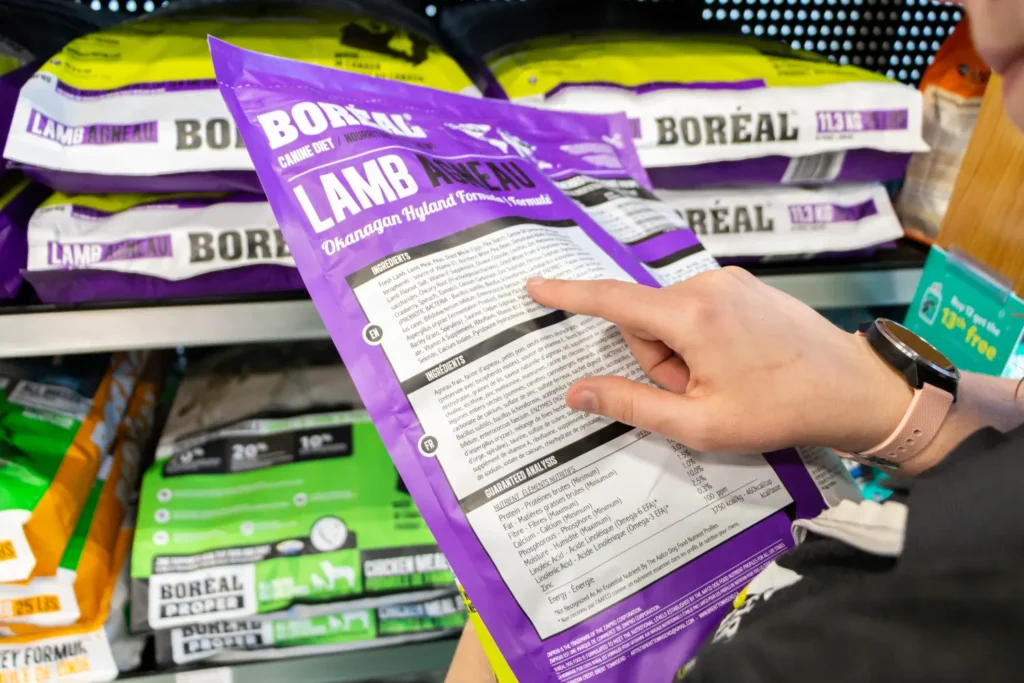
Choosing the right dog food is crucial for your pet’s health, but navigating the ingredient lists and nutritional information on dog food labels can be confusing. Understanding how to read dog food labels helps you make informed decisions, ensures your dog receives balanced nutrition, and prevents feeding foods with harmful ingredients. Whether you’re a new dog owner or looking to improve your dog’s diet, learning to read labels like a pro empowers you to select high-quality, safe, and nutritious food.
Understand the Guaranteed Analysis
The guaranteed analysis section of a dog food label provides key information about nutrient content, including protein, fat, fiber, and moisture levels.
-
Protein: Essential for muscle development, repair, and overall growth. Look for a protein source as the first ingredient.
-
Fat: Provides energy, supports healthy skin and coat, and aids in nutrient absorption.
-
Fiber: Supports digestion and helps maintain a healthy weight.
-
Moisture: Indicates water content; higher moisture is common in wet foods, while dry kibble has lower moisture.
By understanding these percentages, you can compare different brands and formulas to ensure your dog receives appropriate nutrition for their life stage and activity level.
Identify the First Few Ingredients
Ingredients are listed in descending order by weight, meaning the first ingredient makes up the largest portion of the food. High-quality dog food should list real animal protein, such as chicken, beef, lamb, or fish, as the first ingredient. Avoid foods that list by-products, fillers, or unnamed meat sources. Ingredients like whole grains, vegetables, and fruits are beneficial additions, while artificial colors, flavors, or preservatives should be minimized.
Look for Life Stage and Breed Information
Dog food labels indicate the intended life stage of the product, such as puppy, adult, or senior. Puppies need higher protein and fat content to support growth, while senior dogs require easily digestible nutrients and joint-supporting supplements. Some brands also provide breed-specific formulas for small, medium, or large breeds, addressing unique nutritional requirements. Selecting food appropriate for your dog’s life stage ensures balanced nutrition tailored to their needs.
Understand Health and Functional Claims
Many dog food labels feature claims such as “supports joint health,” “promotes shiny coat,” or “grain-free.” While these claims may reflect certain nutritional benefits, it’s important to verify the ingredients and nutrient content behind them. For example, foods claiming joint support may include glucosamine and chondroitin, while coat-promoting foods often contain omega-3 fatty acids. Check whether the claims are supported by the ingredient list and consult your veterinarian if you have questions about specific health needs.
Check for AAFCO Statements
The Association of American Feed Control Officials (AAFCO) sets nutritional standards for pet foods. Look for an AAFCO statement on the label, which indicates that the food meets minimum nutrient requirements for growth, maintenance, or all life stages. This statement is often found near the bottom of the label and may read: “Formulated to meet the nutritional levels established by the AAFCO Dog Food Nutrient Profiles.” Choosing foods with AAFCO approval ensures your dog receives a complete and balanced diet.
Understand Caloric Content
Dog food labels may include the calorie content per serving, usually expressed in kilocalories (kcal). Understanding calories helps you determine portion sizes and manage your dog’s weight. Active dogs may require more calories, while less active or senior dogs need fewer. If your dog is gaining or losing weight unexpectedly, adjust portion sizes based on caloric information and consult your veterinarian for guidance.
Watch Out for Fillers and Additives
Some dog foods contain fillers like corn, wheat, or soy, which add bulk but provide limited nutritional value. While these ingredients are not harmful to most dogs, they should not dominate the food. Artificial colors, flavors, and preservatives can also be avoided in favor of natural alternatives. Reading labels carefully helps you choose foods with higher-quality ingredients that support long-term health.
Tips for Comparing Dog Food Labels
-
Compare protein sources: Animal proteins should come first; avoid generic terms like “meat meal” without specifying the source.
-
Evaluate carbohydrate sources: Whole grains, vegetables, and legumes are better than corn syrup or refined grains.
-
Check fat sources: Look for named fats such as chicken fat or fish oil, which provide essential fatty acids.
-
Consider additives: Vitamins, minerals, and probiotics can be beneficial; avoid unnecessary artificial additives.
-
Match food to your dog: Ensure the label aligns with your dog’s life stage, breed, and health requirements.
FAQs
1. What does “by-product” mean on a dog food label?
By-products are parts of an animal not typically consumed by humans, such as organs and bones. High-quality by-products can be nutritious, but vague or unnamed by-products should be avoided.
2. Is grain-free food better for all dogs?
No. Grain-free food is only necessary for dogs with specific allergies or sensitivities. Most dogs digest grains well, and high-quality grains provide essential nutrients.
3. How can I compare two dog foods effectively?
Compare ingredient lists, guaranteed analysis, AAFCO statements, and caloric content. Focus on high-quality protein, moderate fat, and limited fillers.
4. What should I look for in treats compared to regular dog food?
Treats should be low in calories, made from wholesome ingredients, and not exceed 10% of daily caloric intake.
5. Can I trust marketing claims on dog food labels?
Marketing claims may be exaggerated. Always verify claims by reviewing the ingredient list and consulting your veterinarian if needed.
Conclusion
Reading dog food labels like a pro is essential for ensuring your dog receives the nutrition they need for a healthy, active life. By understanding the guaranteed analysis, identifying high-quality ingredients, checking for AAFCO approval, and interpreting health claims, you can make informed decisions about your dog’s diet. Careful label reading helps you avoid low-quality foods, select the best options for your dog’s life stage and health, and maintain their long-term well-being. With these insights, you can confidently provide meals that support your dog’s happiness, energy, and overall health.